
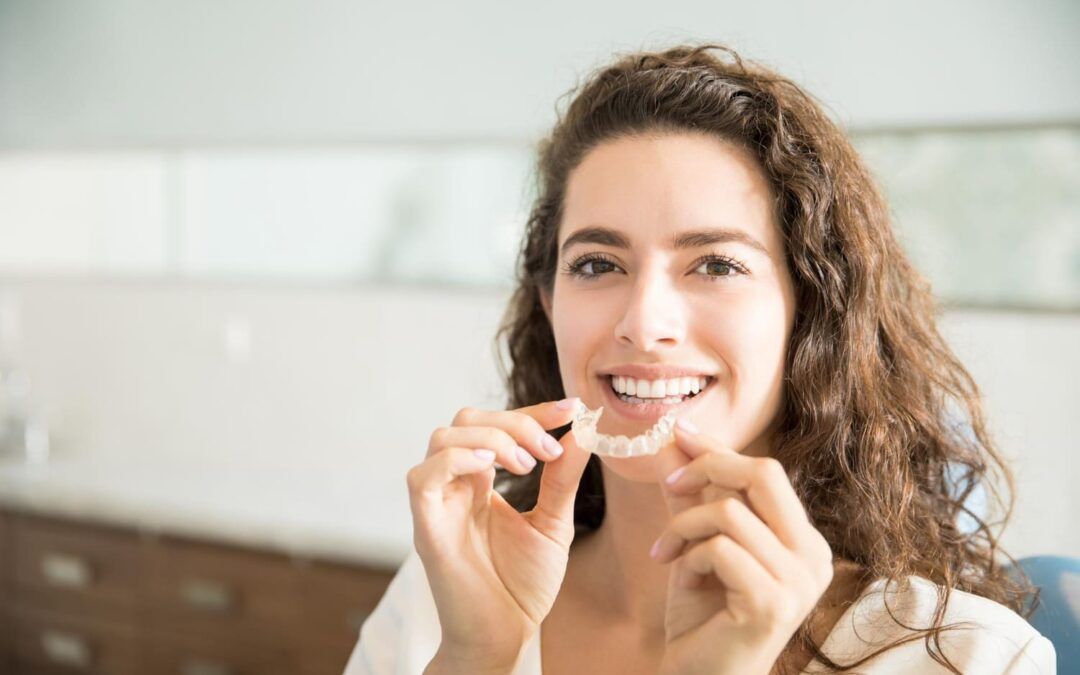
Invisalign is one of those treatments people get excited about quickly. And we get it. Clear aligners are discreet, removable, and a lot easier to picture in real life than brackets and wires. You can take them out to eat, brush, floss, and show up to work, school, or photos without feeling like your orthodontic treatment is the first thing people notice.
But here’s the honest neighbor dental answer: Invisalign can fix many smile and bite concerns, but it cannot fix everything. The best way to know where you fall is to have your teeth, bite, gums, and goals evaluated by a dental team that offers both Invisalign and traditional orthodontic options.
What Invisalign is designed to do
Invisalign uses a series of clear, custom aligners to gradually move your teeth over time. Each set of aligners applies controlled pressure to guide specific teeth into better positions. As you move through your aligner trays, your smile shifts in planned stages.
At neighbor dental in Laurel, our on-site orthodontist works with both teens and adults using Invisalign. We examine your teeth, talk through your goals, and monitor your progress with regular check-ins so your treatment stays on track.
Invisalign can often fix crowded teeth
Crowding happens when there is not enough room for the teeth to line up properly. You may notice overlapping teeth, teeth turned at odd angles, or areas that are difficult to floss. Crowding can affect the way your smile looks, but it can also make home care harder.
Invisalign can often help with mild to moderate crowding by gradually creating better alignment. In more severe crowding cases, braces or another approach may be more predictable.
Invisalign can help close gaps
Gaps between teeth are another common reason patients ask about Invisalign. Clear aligners may help close small or moderate spaces by moving teeth closer together in a controlled way. This can make the smile look more balanced and can sometimes improve how the teeth fit together.
Large gaps can be more complicated. Sometimes spacing is caused by tooth size, missing teeth, gum issues, or jaw relationship, so we need to understand the cause before recommending Invisalign.
Invisalign can improve some bite problems
Invisalign is not only about straight front teeth. In many cases, clear aligners can help improve mild to moderate bite concerns, including overbite, underbite, crossbite, and open bite. The key phrase is “mild to moderate.”
A bite problem is more than a cosmetic issue. It affects how your teeth meet, how pressure is distributed, and how comfortable chewing feels. If the bite issue is mostly tooth-position related, Invisalign may be a good option. If the jaw position itself is the bigger issue, braces or more advanced treatment may be needed.
Invisalign can fix some rotated teeth
Rotated teeth can sometimes be corrected with Invisalign. The amount of rotation matters. Some teeth are easier to move than others, and some rotations require more control than aligners can reliably provide on their own.
If you have one tooth that seems stubbornly twisted, we’ll look at its shape, position, spacing, and bite before telling you what is realistic.
Invisalign can help with relapse after braces
A lot of adults come to us with the same confession: “I had braces, but I stopped wearing my retainer.” No judgment. Life happens.
If your teeth have shifted after previous orthodontic treatment, Invisalign may be a great way to bring them back into better alignment. These cases can sometimes be simpler than full orthodontic treatment, depending on how much movement is needed.
What Invisalign usually cannot fix by itself
Invisalign is powerful, but it has limits. Clear aligners may not be the best choice for severe misalignment, complex bite problems, major rotations, very large gaps, or cases that need significant root movement. If teeth need more controlled force, traditional braces may be better.
Invisalign also depends on patient commitment. Since aligners are removable, they only work when you wear them consistently. If trays are out too often, treatment can slow down or become less predictable.
Invisalign cannot replace missing teeth
This one is important. Invisalign can move teeth. It cannot replace teeth that are already missing.
If you have a missing tooth, we may need to talk about tooth replacement options before, during, or after orthodontic treatment. At neighbor dental, we offer dental implants, implant-supported bridges or dentures, and other restorative solutions in our Laurel office. Sometimes orthodontics helps create the right space for an implant. Other times, replacing a missing tooth helps complete the smile after alignment.
Invisalign cannot solve active gum disease first
Healthy gums matter before orthodontic movement. If your gums are inflamed, bleeding, receding, or affected by periodontal disease, we need to address that before moving teeth. Moving teeth through unhealthy support can create bigger problems.
One benefit of neighbor dental is that we have a periodontist on our team. If gum health needs attention, we can coordinate care right here instead of sending you into a maze of referrals.
Invisalign vs braces: how we help you choose
This is not about which treatment is “better.” It is about which treatment is better for your mouth. Braces are often best for more complex cases, severe misalignment, and situations that need constant force without relying on removable trays. Clear aligners are nearly invisible, removable, and often better suited for mild to moderate corrections.
We will explain the tradeoffs clearly. No pressure. No mystery. Just honest guidance based on what your teeth actually need.
What happens at your Invisalign consultation?
Your consultation starts with a conversation. We ask what bothers you, what you want your smile to look like, and what kind of treatment fits your life. Then we evaluate your teeth, bite, gums, and overall oral health.
If Invisalign looks like a good fit, we’ll explain the process, timeline, expectations, and what it takes to get the best result. If braces, implants, cosmetic treatment, or periodontal care would serve you better, we’ll tell you that too.
The best Invisalign results come from teamwork
Invisalign may look simple from the outside, but great results still need planning and follow-through. You wear the aligners. We monitor the movement. Together, we make sure the plan is doing what it is supposed to do.
At neighbor dental, we don’t just hand you trays and send you on your way. We support you through the process, answer questions, and help adjust the plan when needed.
Ready to find out what Invisalign can fix for you?
You don’t have to diagnose your own bite from the mirror. If you have crowded teeth, gaps, shifting after braces, or a bite that feels off, we can help you understand what Invisalign can realistically do and when another option may be better.
Call (301) 498-5320 or request your appointment online. Your future smile deserves honest answers, a clear plan, and a team that treats you like a neighbor.